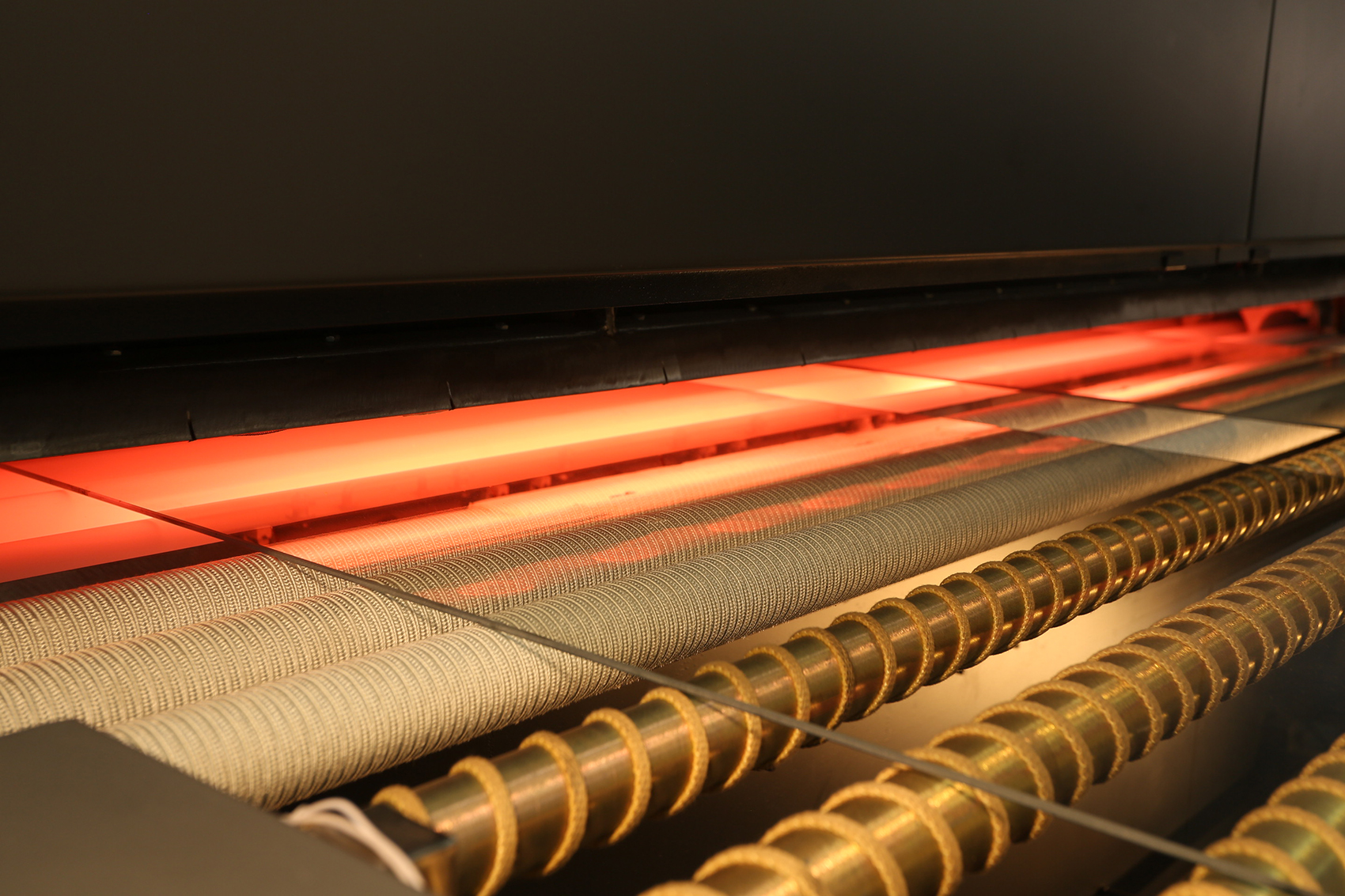
Compared with irregular hot spots caused by insufficient cleanliness, hot spots resulting from poor equipment condition show obvious regular characteristics, mostly appearing as dot-like or linear traces along the roller movement path. The condition of furnace components in direct contact with the glass directly affects the formation pattern of hot spots.
The core problem usually lies in the roller system that supports the glass. Over time, the roller surface may suffer wear, oxidation, or form tiny pits due to high temperature and friction. In addition, special attention should be paid to equipment damage caused by improper process parameters. Excessive injection of sulfur dioxide process gas will form raised spots on the roller surface, which in turn leave corresponding hot spots on the tempered glass surface.
Therefore, the establishment of a preventive furnace maintenance system is critical. The primary task is to implement a regular inspection and maintenance plan for the roller system of the glass tempering machine, use professional measuring tools to detect the flatness and concentricity of the rollers, and promptly replace or polish rollers that are excessively worn or severely damaged on the surface. Secondly, the injection volume and uniformity of sulfur dioxide must be accurately controlled and monitored, and strictly limited within the process requirements to avoid damage to the rollers.