In glass tempering production, "white haze" is a common surface quality defect. It presents itself as microscopic scratches or cloudy marks on the tempered glass surface, appearing in various forms: longitudinal white stripes in the center, transverse haze marks at both ends, hazy areas near the corners, or equally spaced, repetitive streaks. Fundamentally, white haze is caused by excessive mechanical friction between the glass—while in its high-temperature, softened state—and the ceramic rollers of the tempering furnace. The specific root causes involve multiple variables, including equipment precision, heating temperatures, and process operations. Drawing upon extensive production experience, LandGlass has systematically analyzed the three core causes of white haze along with their corresponding troubleshooting methods for industry reference. As the first article in this series, this piece focuses on the hardware foundation: the mechanical precision of the ceramic rollers.
The mechanical precision of the ceramic rollers and the drive system is a critical factor influencing the occurrence of white haze, which depends primarily on three critical factors: roller drive synchronization, radial runout, and leveling accuracy. First, when drive belts or chains experience uneven tension, wear, or slippage, it disrupts the drive synchronization among the rollers. This causes the glass to experience non-uniform friction as it advances, leading to a sudden surge in localized pressure that subsequently generates white haze. Second, roller warping, damaged bearings, or insufficient installation accuracy can lead to excessive radial runout. This subjects the softened, high-temperature glass to periodic impacts, forming intermittent scratch stripes. Furthermore, the leveling accuracy of the rollers is equally vital: if a single roller or a specific section exhibits height deviations, the glass will receive uneven support when passing through that area. This results in localized pressure concentrations that induce white haze. Such haze tracks induced by uneven rollers typically appear at fixed transverse positions on the glass, corresponding directly to specific rollers. Resolving these issues requires a shutdown to inspect every link of the drive system step by step: first, adjust the tension of all chains or belts to ensure that all rollers rotate smoothly at identical linear speeds. Next, use a dial indicator to measure the radial runout of the rollers. If the runout value exceeds the specifications defined in the equipment manual, the rollers must be realigned or replaced. Finally, a precision spirit level should be used to calibrate each roller, restoring leveling accuracy by adjusting the shims or regulating screws at the bearing blocks on both ends of the rollers. The industry-standard maintenance and inspection criteria are as follows: 1)Roller radial runout: ≤ 0.1 mm;2)Leveling deviation per single roller: ≤ 0.05 mm/m; 3)Height discrepancy between adjacent rollers: ≤ 0.08 mm. Any values exceeding these tolerances must be addressed immediately. In addition, dust accumulation on the rollers or wear on their coatings can roughen the roller surfaces, intensifying friction and resulting in severe, large-area white haze defects. During routine production intervals, a high-temperature brush must be used to clear glass debris from the roller surfaces; once the furnace is cooled down, the rollers should be wiped down with a specialized cleaning agent. If the ceramic coating ages and peels off, it must be recoated promptly. After recoating, the empty furnace should be baked at high temperatures for 2 to 3 hours before resuming production, preventing dust from the new coating from contaminating the glass and causing further haze issues.
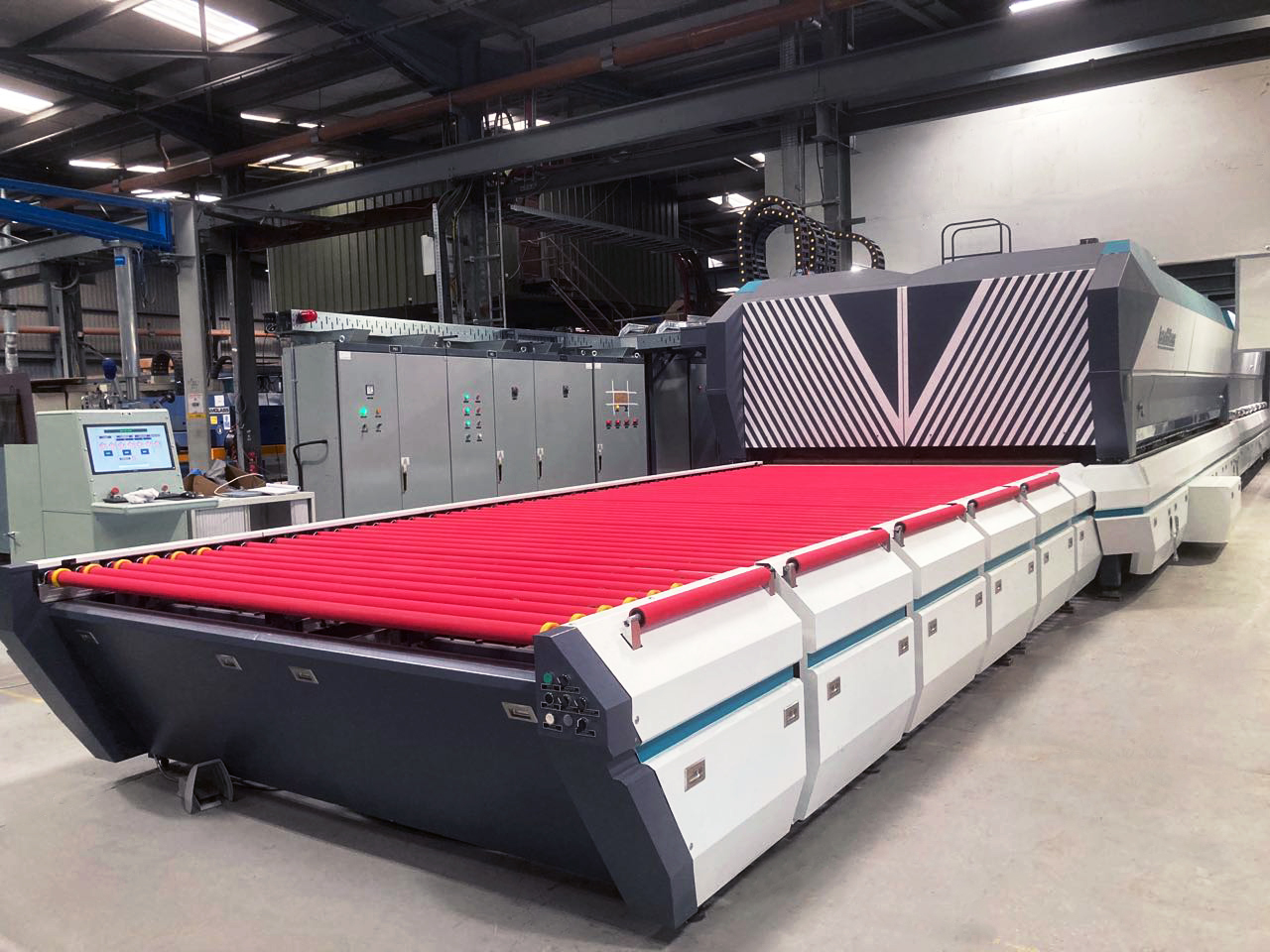
Hardware is the foundation; without a solid foundation, process adjustments are out of the question. With the mechanical precision of the roller system aligned to standards, heating temperature control becomes the next critical factor. How temperature differences between the upper and lower sections, as well as localized overheating, trigger white haze will be detailed in Part II. Stay tuned.